Jul
KIU’s CBE Model Draws Lira University Benchmark Visit
July 9, 2026, 1:28 pm
 Nakanwagi Annet
• July 9, 2026, 1:28 pm
Nakanwagi Annet
• July 9, 2026, 1:28 pm
KIU, Western Campus — Kampala International University (KIU) on Thursday, July 9th, 2026, hosted a delegation from Lira University at its Western Campus (WC) for a benchmark visit on the implementation of Competence-Based Education (CBE), providing a platform for both institutions to exchange best practices in quality assurance, clinical training, research, innovation, and university management.
The delegation, led by Michael Peter Owiny, Director of Quality Assurance (QA), was received by the KIU-WC leadership headed by Assoc. Prof. Eric Mabonga, Deputy Vice Chancellor (DVC), who welcomed the visitors and reaffirmed the university’s commitment to promoting collaboration among higher education institutions through knowledge sharing and mutual learning.
Assoc. Prof. Mabonga noted that benchmark engagements enable universities to strengthen institutional systems, improve teaching and learning, and collectively produce graduates equipped with the competencies required to meet today’s labour market demands.
The delegation later toured KIU’s state-of-the-art teaching and research facilities, including the Institute of Biomedical Research (IBR), Microbiology Laboratory, Physiology Laboratory, Human Anatomy Department comprising the Histology Laboratory and Anatomy Museum, Biochemistry Laboratory, the Animal House, and workshops and laboratories in the School of Engineering and Applied Sciences (SEAS).
During the subsequent presentations, Dr. Ibrahim Babangida, Assistant DVC for Academics and Research, explained that KIU’s CBE model emphasizes practical learning, industry collaboration, and hands-on skills development.
He said the university works closely with its affiliated teaching hospital by deploying university-employed specialists who supervise students during clinical placements while also providing healthcare services. He added that KIU’s Bioengineering team routinely maintains and repairs medical equipment to support uninterrupted clinical training.
Dr. Babangida also highlighted KIU’s support for Uganda’s Higher Education Certificate (HEC) programme, emphasizing that the university believes students affected by socioeconomic challenges deserve another opportunity to pursue higher education.
“A student from a well-resourced school in Kampala cannot be compared with one from a rural area where opportunities are limited. These students deserve a second chance,” he said.
He noted that institutional data has shown that some students admitted through the HEC pathway perform better than those admitted through the conventional route after completing the bridging programme.
Beyond academics, Dr. Babangida highlighted KIU’s commitment to community engagement through free medical outreaches, stakeholder dialogues, public health education programmes, and public lectures addressing emerging societal issues. He also revealed that the university is integrating sexuality education as a cross-cutting course for all first-year students in partnership with UNESCO, the World Health Organization (WHO), and Uganda’s Ministries of Education and Health.
Presenting KIU’s quality assurance framework, Dr. Andrew Onchonga Nyakundi, Director of QA and Monitoring, said the university has institutionalised continuous monitoring and evaluation to safeguard academic excellence.
He explained that the Directorate operates under the KIU QA Handbook and monitors teaching, learning, assessment, research, innovation, infrastructure, staff performance, and institutional compliance using standards derived from the National Qualifications Framework, university regulations, and the CBE framework.
“Our responsibility is not merely inspection but continuous improvement. Quality assurance is everyone’s responsibility, and every member of staff understands that maintaining standards is part of their daily work,” Dr. Nyakundi said.
Responding to questions on balancing teaching, research, and clinical service, Dr. Godson Emeka Anyanwu, Dean of the Faculty of Biomedical Sciences, said KIU has adopted an integrated supervision model that brings together basic scientists and clinical scientists to strengthen postgraduate research.
He explained that Master’s and PhD students are jointly supervised to ensure their research demonstrates academic excellence while addressing policy, innovation, and community needs.
The presentations generated lively discussions among the visiting delegation.
Ursula Abwot, Assistant Lecturer at Lira University, commended KIU’s strong academic staffing and mentorship culture while seeking to understand how the university integrates entrepreneurship and other cross-cutting programmes into CBE. She also shared Lira University’s plans to establish a business incubation hub and introduce an Advanced Social Entrepreneurship and Innovation programme to equip students with skills to solve community challenges through sustainable enterprises.
Benard Ogwok, QA Officer, praised KIU’s model of assigning university-employed academic staff to affiliated teaching hospitals, describing it as an effective approach to supervising medical students during clinical placements. He also sought guidance on how KIU manages clinician-academics who simultaneously teach, conduct research, and provide clinical services.
Meanwhile, Prof. Edward Ojuka from Lira University’s Department of Physiology shared his institution’s participation in an Erasmus+ programme involving universities from Uganda, Kenya, Rwanda, South Sudan, and Europe to develop a common climate change curriculum that will be offered as a compulsory first-year course. He commended KIU for openly sharing its experiences and encouraged universities to continue collaborating in research, innovation, and community engagement.
Delivering the vote of thanks on behalf of the visiting delegation, Wilfred Acayo Kilama, Deputy Academic Registrar at Lira University, described the benchmark visit as insightful and highly productive.
“You welcomed us as brothers and sisters and shared your experiences without reservation. It is this spirit of collaboration that will help improve higher education in Uganda,” Kilama said.
He noted that the team was returning to Lira University with practical lessons on CBE implementation, quality assurance, research, innovation, and university governance that would strengthen academic practice and institutional service delivery.
Other delegates from Lira University included Owori F. Oguffe, Senior QA Officer, and Gad Kwizera, Deputy Dean, Faculty of Education, who actively participated in the benchmark discussions throughout the visit.
Delivering the closing remarks on behalf of KIU, Dr. Asiati Mbabazi, University Secretary, thanked the delegation for choosing KIU as a benchmark institution and described the engagement as mutually enriching.
She observed that while the visitors had learnt from KIU’s experiences, the university had equally benefited from Lira University’s ideas and perspectives, expressing optimism that the engagement had laid a strong foundation for long-term collaboration in academic development, research, innovation, quality assurance, and staff exchange.
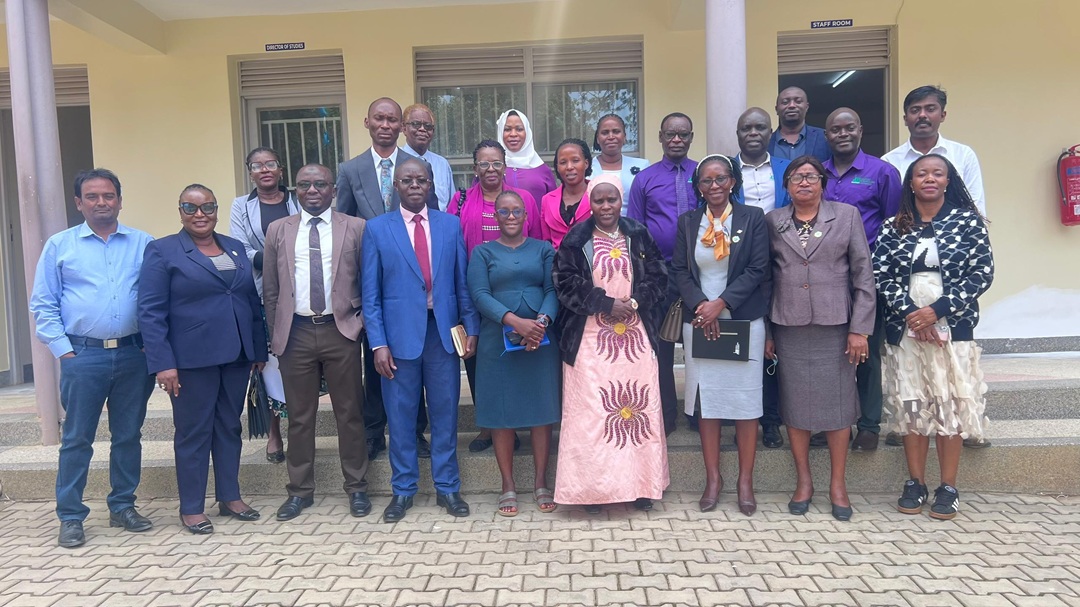
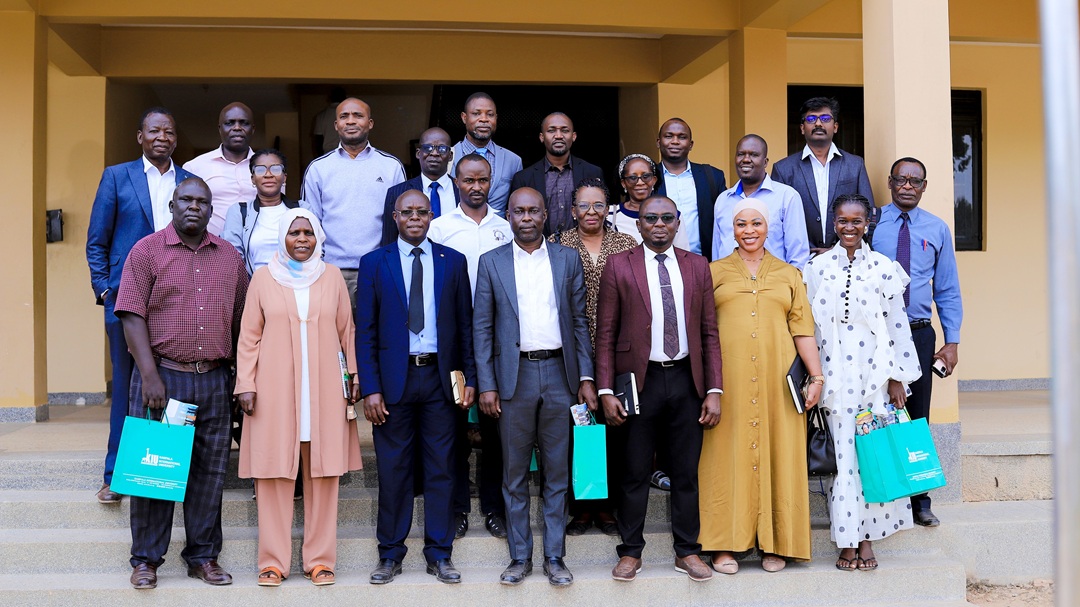
The benchmark visit concluded with the presentation of commemorative gifts, a group photograph, and a networking luncheon, with both universities reaffirming their commitment to advancing Competence-Based Education, promoting research excellence, driving innovation, and strengthening collaboration in pursuit of quality higher education.
Kampala International University, Box 20000, Ggaba Road, Kansanga, Kampala
+256-760 502660
+256-700 100808